فروری 1983ء میں مولانا محمد اسلم قریشی مبلغ تحفظ ختم نبوت سیالکوٹ کو مرزائی سربراہ مرزا طاہر کے حکم پر مرزائیوں نے اغوا کیا۔ جس کے ردعمل میں پھر سے تحریک منظم ہوئی۔ بالآخر 26 اپریل 1984ء کو امتناع قادیانیت آرڈیننس صدر مملکت جنرل محمد ضیاء الحق صاحب کے ہاتھوں جاری ہوا۔ قادیانیت کے خلاف آئینی طور پر جتنا ہونا چاہیے تھا اتنا نہیں ہوا لیکن جتنا ہوا اتنا بھی آج تک کبھی نہیں ہوا تھا۔
امتناع قادیانیت آرڈیننس کیا ہے؟
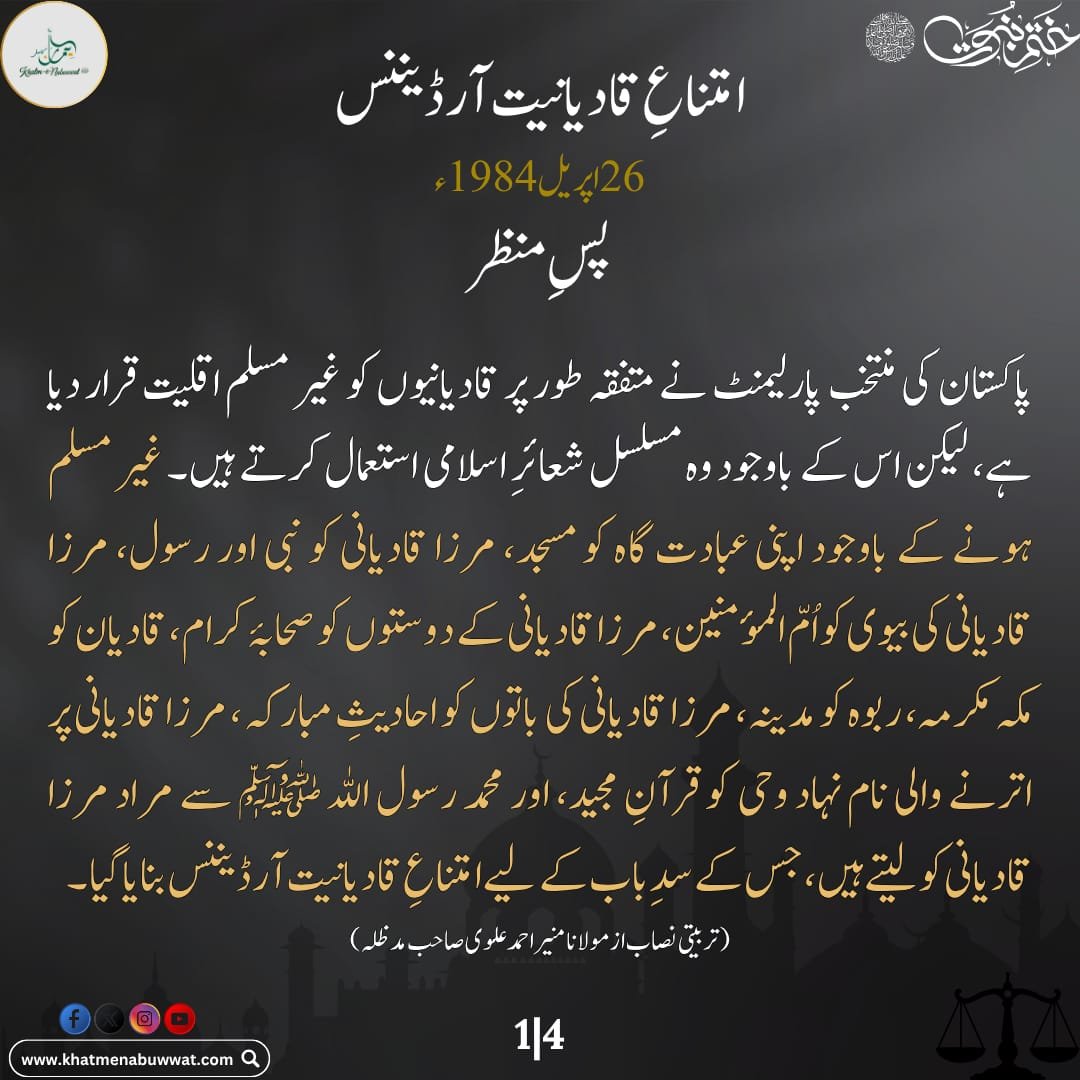
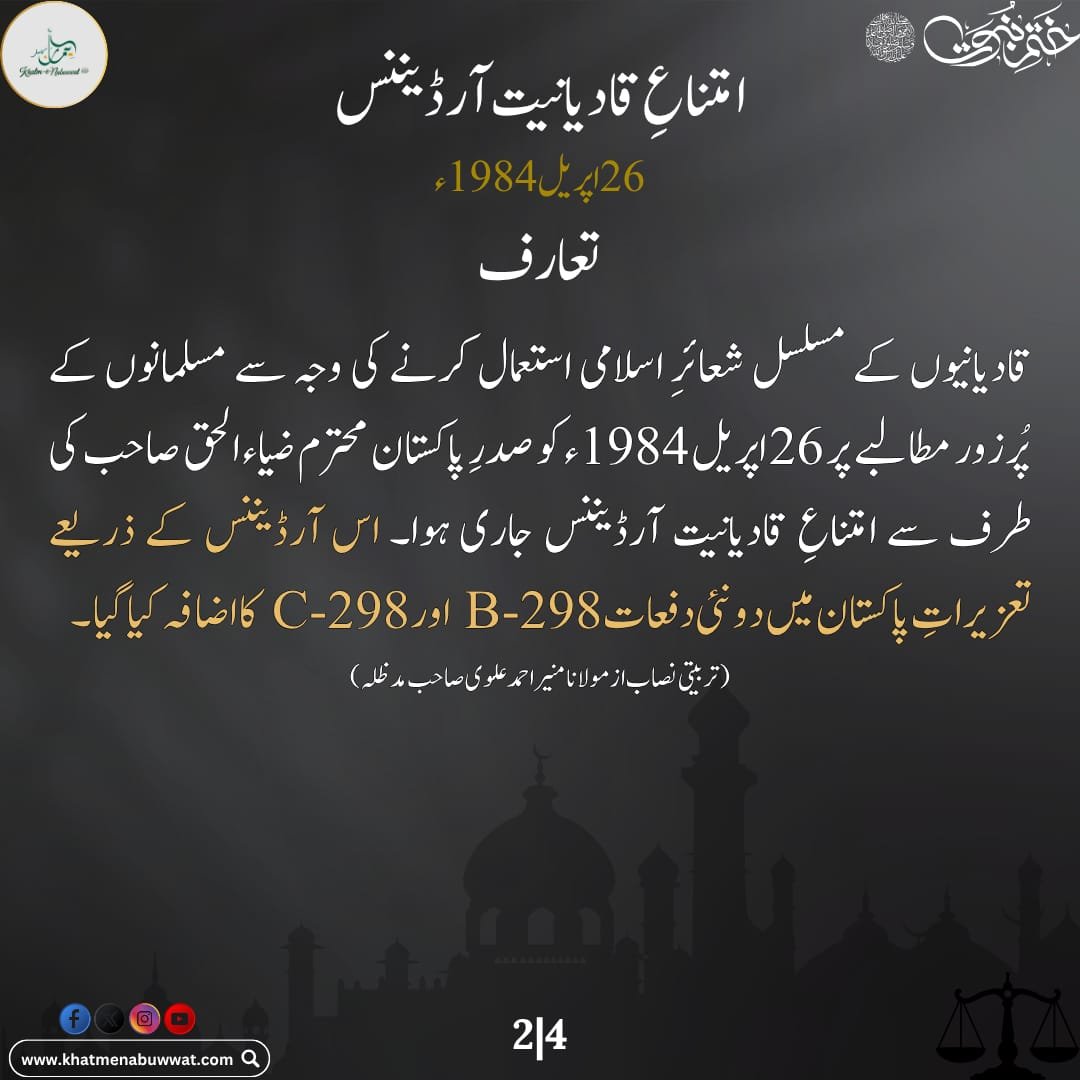
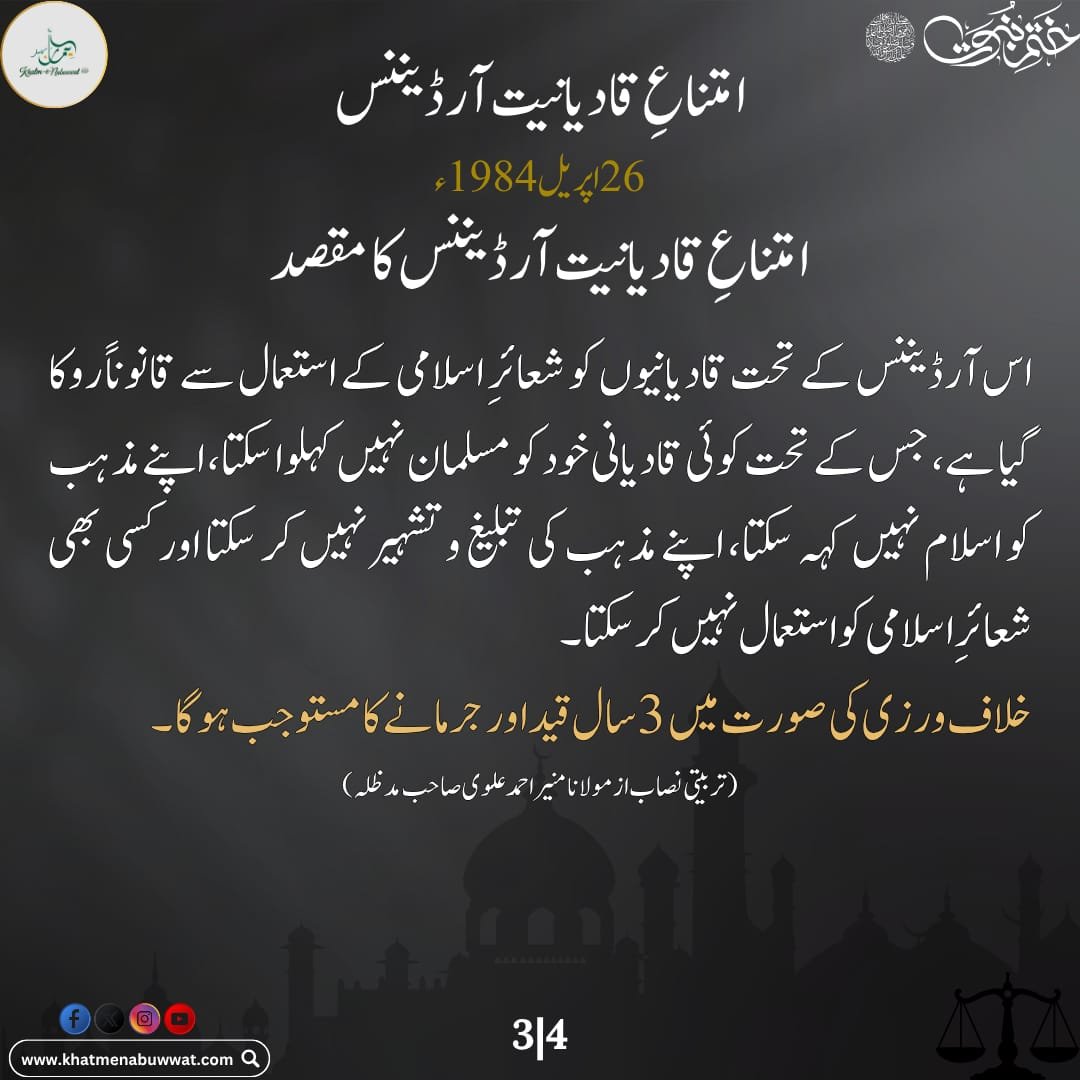
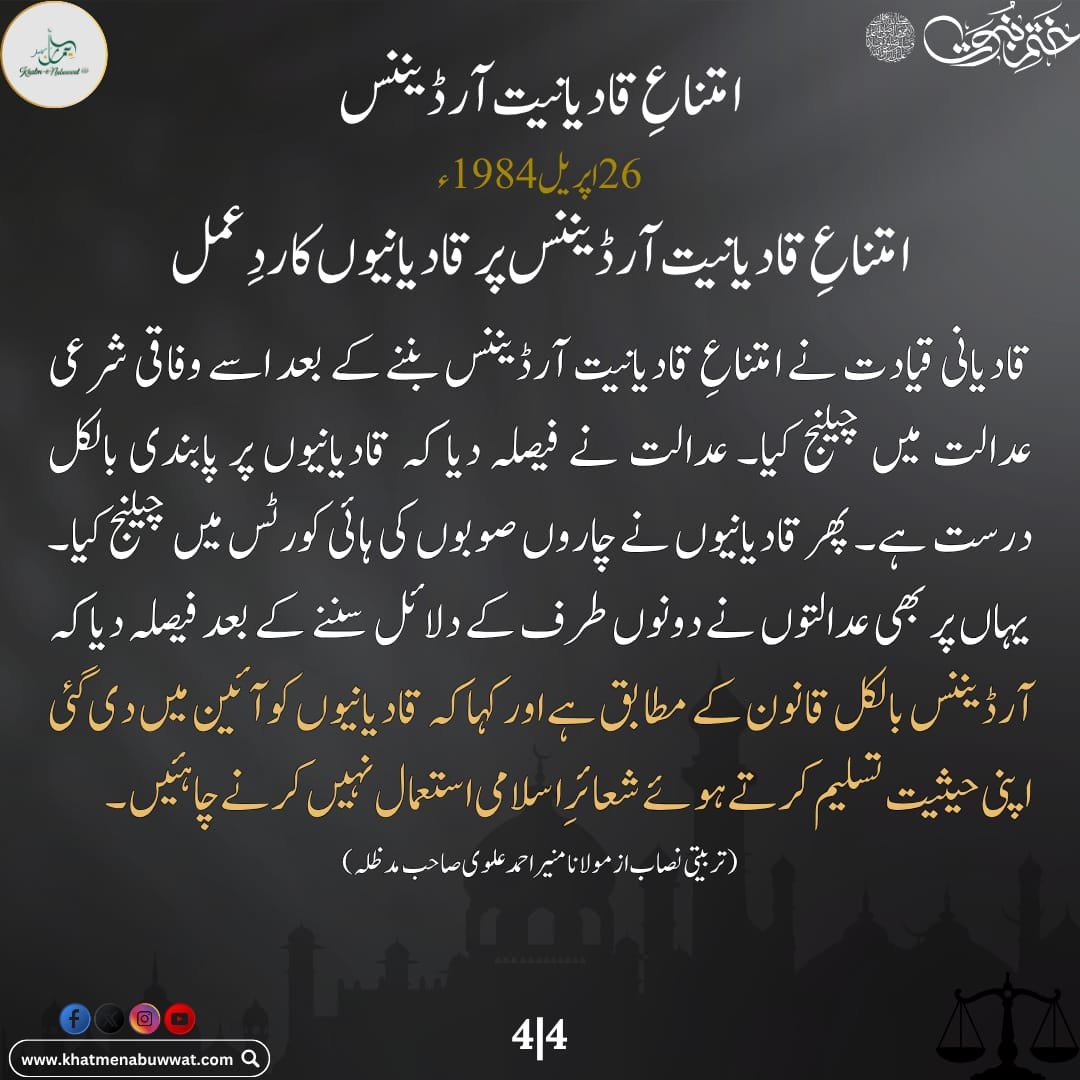
ء1974 میں کی گئی آئینی ترمیم کے تحت قادیانیوں کے لئے یہ ممکن نہیں تھا کہ وہ اپنے آپ کو مسلمان کہیں یا اپنے دین کو دین اسلام کہہ کر اُس کی اشاعت کریں۔ مگر اُنھوں نے قانونی ترمیم پر عمل کرنے کی بجائے اُس کے برخلاف رویّہ اپنایا اور اپنے دین کو دین اسلام ہی کہتے رہے۔ اور اُن کا یہ رویّہ اور عمل آج تک جاری و ساری ہے، جس کو روکنے کے لئے حکومت نے 1984 میں آرڈننس نمبر 20 (امتناع قادیانیت آرڈننس) جاری کیا۔ امتناع قادیانیت آرڈیننس 26 اپریل 1984 کو نافذ کیا گیا جس کے تحت 298(بی) اور 298(سی) کو آئین کا حصہ بنایا گیا۔
On 17 February 1983, Maulana Muhammad Aslam Qureshi, a preacher of the Tehreek Tahaffuz Khatm-e-Nubuwwat in Sialkot, was abducted by Mirzais on the orders of their leader Mirza Tahir. As a result, the movement was reorganized once again. Eventually, on 26 April 1984, the Anti-Qadiani Ordinance was promulgated by the President of Pakistan, General Muhammad Zia-ul-Haq. Although constitutionally not as much was done against Qadianism as could have been, whatever was done had never been done before to that extent.
What is the Anti-Qadiani Ordinance?
After the legal amendment made in 1974, it was no longer possible for Qadianis to call themselves Muslims or to propagate their religion as Islam. However, instead of complying with the legal amendment, they continued to act خلاف (contrary to it) and kept referring to their religion as Islam and this practice continues to this day.
To curb this, the government issued Ordinance No. 20 (Anti-Qadiani Ordinance) in 1984. This ordinance was enforced on 26 April 1984, under which Sections 298-B and 298-C were incorporated into the law.